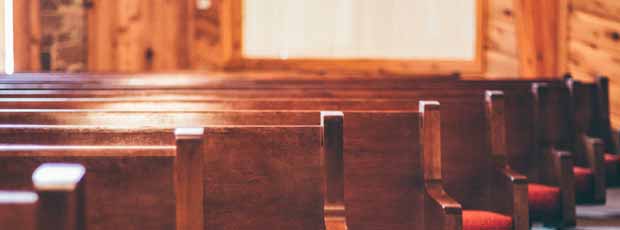
Preaching is Important

A few years ago I hosted my friend Dr. Gary L. McIntosh for a conference that discussed assimilation principles taken from his book, Beyond the First Visit. Fortunately, while he was with us, Dr. McIntosh unveiled the findings of a recent national survey he conducted.

…I was somewhat surprised by the overwhelming importance of the pastor’s preaching.

I knew that the pastor played an important role in reaching and keeping people in a local church, but I was somewhat surprised by the overwhelming importance of the pastor’s preaching. Consider these findings from the study:

  • 90% of respondents said that the pastor’s preaching influenced their decision to attend a particular church.
  • When asked to rank the order of reasons why they chose to attend their church, the preaching of the pastor ranked #1.

To examine the specifics of the pastor’s role, the survey asked, “What factors of the pastor’s ministry influenced your choice of this church?”  Below are their responses listed in the order of their ranking.

Top 4 Factors In Church Selection:

  1. Preaching that teaches and applies to my life.
  2. Authenticity of the pastor.
  3. Pastor’s convictions.
  4. Pastor’s leadership skills.

This study confirmed what most of us already suspected–the pastor must play a pivotal role if a local church is to experience genuine growth and/or revitalization. Somewhat surprising was the overwhelming importance of preaching.

What Is Church Revitalization?

In my role as Kentucky Baptist Convention Church Consulting & Revitalization Team Leader, I’m often asked about revitalization. How do we define it? How can a church experience it? How can we lead it?

When I began my current KBC role, Dr. Kenneth Priest and I launched the national SBC Revitalization Network that now includes 41 autonomous state conventions. This group consists of Southern Baptist State Convention leaders who have responsibility in the area of revitalization. I currently lead the group as chair of the leadership team that includes David Ludwig (Pennsylvania-South Jersey), Sean Keith (Louisiana), Jason McNair (Utah/Idaho), and Ralph Neighbor (California).

Although many excellent definitions exist for church revitalization, we created the one below. We firmly believe that revitalization of a local church is marked by the components found in our definition.

The supernatural work of God that restores health in a church, evidenced by submission to God’s Word, right relationships among members, and a renewed commitment to Great Commission ministry. (SBC Revitalization Network)

5 Marks of Church Revitalization

  1. Revitalization is a supernatural work of God. Yes, we play a part, but ultimately it is the work of the Holy Spirit of God. Jesus said, “…I will build my church” (Matthew 16).
  2. Revitalization restores health in a church. Churches in need of revitalization are almost always plagued with poor spiritual health.
  3. Revitalization involves submission to the Scriptures. A key, repeated component of churches that experience revitalization is a renewed commitment to the authority of God’s Word.
  4. Revitalization often involves conflict resolution and forgiveness. Struggling churches often have conflicts within and/or between members that have existed for years. Resolving those conflicts is paramount to a sustained season of church revitalization.
  5. Revitalization focuses on the Great Commission. Churches desiring revitalization give proper place to The Great Commission, “Go therefore and make disciples of all nations, baptizing them in the name of the Father and of the Son and of the Holy Spirit, teaching them to observe all things that I have commanded…” (Matthew 28:19-20, NKJV).

Studies show that as high as 70% of SBC churches are plateaued or declining. There are many prayers to be prayed and much work to be done if we are to see churches experience revitalization. As part of our effort, the team I lead at the KBC recently released a book entitled, Lead to Revitalize: 15 Practices of a Revitalization Leader. If you have questions about revitalization, contact your state convention leader and they will be happy to assist you in this important ministry area. Feel free to contact me directly if you have any questions and/or suggestions.

6 Reasons I Like Deacons

I have served “as” a deacon and I have served “with” deacons. As a pastor I appreciated the office of deacon and the men who served in that role. Here are a few of the reasons I really like deacons:

6 Reasons I Like Deacons

1. Deacons are fellow servants. As a pastor, I was a servant of the Lord and a servant of the church. According to Acts 6, my main role as a pastor was to serve the church through preaching/teaching and prayer. Likewise, deacons are servants of the Lord and servants of the church.

2. Deacons are fellow men. I know there are exceptions where women serve as deacons, but in all the churches where I served as pastor, the deacons were all men. Men need to be around other men. We need the accountability and the example. Serving with men of God who were deacons helped to keep me on track in my spiritual walk and discipleship path. As Scripture says, “Iron sharpens iron, and one man sharpens another” (Proverbs 27:17, ESV).

Men need to be around other men.

3. Deacons are human. Even though pastors hold an important office and are held to high standards according to 1 Timothy 3, they are not perfect. They make mistakes just like everyone else. Deacons are held to the same high standards and qualifications as pastors, but they are human also.

4. Deacons are leaders. Most churches are desperate for leadership–especially servant leadership. Deacons, along with pastors, are uniquely positioned to provide much-needed servant leadership modeled after Jesus’ example in John 13.

5. Deacons are partners. Jim Henry, longtime pastor of FBC Orlando, referred to his deacons as “partners in ministry.” That is the perfect title for a deacon. No pastor or staff can carry out all the ministry needed in a local church. We need to partner together to serve God’s church.

…deacons are partners in ministry.

6. Deacons are friends. Some of my closest friends have been deacons with whom I have been privileged to serve.

Related Posts:

Influence and Impact

Leaders want to have influence and make an impact!

Almost everyone wants their life to count! It is Scriptural to want to have influence and make an impact for the Lord! The Apostle Peter understood that, so he wrote about it in his letter to the believers in northern Asia Minor.  Some of them were present in Jerusalem on the Day of Pentecost and heard Peter preach, but now they were suffering greatly from intense persecution.  In his letter, he encourages them to continue impacting others for the Lord during days of great difficulty.

3 Ways to Have Influence and Make An Impact

1.  Start serving.  To the elders among you, I [Peter] appeal as a fellow elder, a witness of Christ’s sufferings and one who also will share in the glory to be revealed:  Be shepherds of God’s flock that is under your care, serving as overseers—not because you must, but because you are willing, as God wants you to be….” (1 Peter 5:1-2a).  Peter saw Jesus serve others through suffering.  When we take our eyes off our own struggles and focus on others, we imitate Jesus and we make an impact.

2.  Be humble.  “Young men, in the same way be submissive to those who are older. All of you, clothe yourselves with humility toward one another, because, ‘God opposes the proud but gives grace to the humble'”  (1 Peter 5:5).  Surely Peter had the Upper Room towel and basin scene in mind as he wrote these words.  God uses those with a humble heart and He gives them grace.  I have noticed that all my “heroes” in the faith are men and women marked by humility.  Most Christians admire and respect those who have a humble spirit.

…all my “heroes” in the faith are men and women marked by humility.

3.  Trust God.  “Cast all your anxiety on him because he cares for you” (1 Peter 5:7).  God is in control.  Even when we cannot see or sense Him, He is there.  Not only is He there, He CARES!  HE is the key!  Knowing He is in control during difficult moments should free us to focus on others and to continue to faithfully serve Him.

4 Keys to Leadership

Leader.3

During my reading over the last few years, I have read dozens of books on leadership. Allow me to summarize four leadership keys that stand out to me from those books.

1. Leaders are born AND made. Leadership is defined as “the ability to influence others.” Leaders can lead people for noble purposes or for evil purposes. The question often comes up, “Are you born a leader or do you learn to be a leader?” The answer to the question is “yes” and “yes.” Some people are born with natural leadership abilities, but leadership can be learned as well.

2. Jesus was a servant leader. People will follow leaders who do not ask their followers to do something that they would not do. By serving others as leaders, we earn the right to lead. People “vest” us with true authority as a result of our service to them.

“The greatest among you will be your servant.” Matthew 23:11

3. Integrity is imperative. The real test of leaders is in their private life. Image is what people think we are; integrity is what we really are! Leaders need to be people of integrity—honest, genuine, consistent, and transparent. They need to have strong spiritual disciplines in the areas of Bible study, prayer, and church attendance.

4. Leaders need to carefully guard their time. Elton Trueblood wrote, “A public man, though he is necessarily available at many times, must learn to hide. If he is always available, he is not worth enough when he is available.” Gordon MacDonald asked one of the most profound questions a leader must face, “Are we going to order our inner worlds so that they will create influence on the outer world? Or will we neglect our private worlds and thus permit the outer sphere to shape us?” This is the choice we have to make every day of our lives. That’s what Paul seemed to say in Romans 12:2.

“Do not conform any longer to the pattern of this [outer] world, but be transformed by the renewing of your mind. Romans 12:2 (NIV)

“Don’t let the world squeeze you into its mold.” Romans 12:2 (Phillips)