Lead to Revitalize – Part 1 (Revitalization Series)

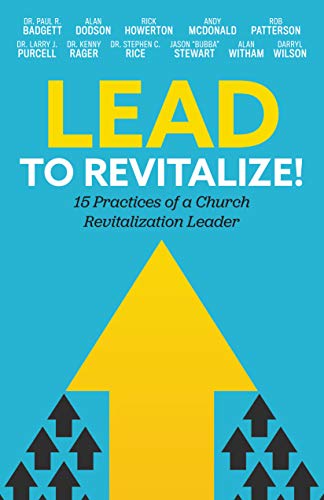
Over the past few years, the Regional Consultants of the Church Consulting and Revitalization Team and I noticed that pastors who successfully led their churches to experience revitalization possessed consistent characteristics. We developed resources on this topic and recently wrote a book entitled Lead to Revitalize: 15 Practices of a Revitalization Leader. The list only scratches the surface, but these ten characteristics stand out to us. I will detail these in a two-part blog post. Here is part one:

10 CHARACTERISTICS OF A REVITALIZATION PASTOR

1.  Revitalization pastors lean into conflict.  Some pastors avoid conflict at all costs. They may develop a brilliant, God-given vision for the future of the church, but they scrap it just as soon as one or two people are critical. Revitalization pastors do not necessarily like conflict, but they are willing to face it in order to fulfill the God-given vision.

2.  Revitalization pastors are willing to take risks. It’s risky to help a church understand that they are being ineffective. It’s rarely pleasant to confront difficult people or to seek restoration of a broken relationship, but revitalization pastors do what’s right instead of merely doing what’s easy and convenient.

3.  Revitalization pastors work hard on church relationships. As a child, most of us learned the little hand visual that accompanied the saying “here is the church, here is the steeple, open the door and here are the people.” As adults, we know that the symbolism is lacking because the church is not a building; the church IS the people. Revitalization pastors understand that building a church means building people.

4.  Revitalization pastors take the lead in evangelism. A church cannot be revitalized without reaching new people with the Gospel. A revitalization pastor places emphasis on evangelism and leads by example in this area. Methods of evangelism vary from church to church and community to community, but churches experiencing revitalization are making new converts for Christ.

5.  Revitalization pastors lead with a vision. Visions are sometimes written, sometimes spoken, and sometimes written and spoken! Revitalization pastors have a God-given vision for the church’s future and they share it regularly with the church.

For more information please contact me.

Click on image to purchase a copy of Lead to Revitalize.

4 Life Lessons from Hiking

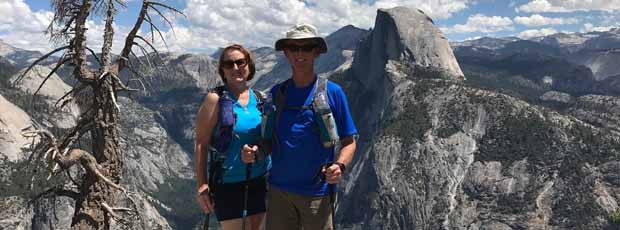
The last few years, Laura and I have become interested in hiking. We don’t plan to thru-hike the Appalachian or the Pacific Crest trail anytime soon–we mainly focus on day hiking. As a result, we enjoy the trail with very little planning and minimal cost. I’ve noticed that there are a lot of similarities between hiking and everyday life.

4 Hiking Lessons

1. Good equipment helps. Good hiking shoes, trekking poles, and backpacks make hiking more enjoyable and hikers more proficient. Likewise equipping ourselves as pastors, disciples, church members, and/or parents makes all the difference. We don’t know what we don’t know, so it helps to be equipped with new knowledge and abilities.

“We don’t know what we don’t know…”

2. Sometimes you hike uphill. We love trails that have lots of climbing. We seek them out when we plan. It’s great exercise to make your way up a long, challenging climb. It’s so rewarding when you reach the top. Life often seems like a long, challenging climb. Christians are not exempt from difficulty. Those difficult life moments often shape us into better people and mold us into more dedicated Christians.

3. Sometimes you hike downhill. Trails that go up eventually come down. Going downhill is easier, but not without challenge. You can easily lose your footing because you are moving faster and with little resistance. Going downhill can lead to a lack of concentration and focus which usually ends poorly. Life is a lot like going downhill. When things are going well and success seems easy we often make quick and uninformed decisions that cause us to fall. “Downhill” makes us feel invincible which leads to decisions laced with arrogance. Solomon warned us that “Pride comes before destruction and an arrogant spirit before a fall” (Proverbs 16:18, HCSB).

“Downhill makes us feel invincible which leads to decisions laced with arrogance.”

4. You can do more than you think. Now that we are hikers, we’ve climbed hills we never imagined that we could. Slowly, steadily, step after step–eventually we reach the top! I’ve watched several YouTube channels of men and women who thru-hiked the Appalachian Trail. When they finished the 2,181-mile trek, they were amazed they covered the entire distance on foot. One guy said, “It blows my mind to think that I just walked from Georgia to Maine!” We should dream big and shoot high in life and in Christ! Through Him and over time we can do more than we could ever imagine (Phil 4:13).

A Real Bullseye

A little boy got a real bow and arrow for his 10th birthday and immediately went outside to practice in his yard. A few minutes later his father stepped outside to check how he was doing and was amazed to see a dozen arrows dead in the center of a dozen different bull’s-eyes that were painted on the trees in the backyard.

“That’s astounding, Son! You just got that bow a few minutes ago. How do you manage to hit a bullseye every time?” “Easy, Dad. First I shoot the arrow. Then wherever it lands, I paint circles around it!”

…wherever it lands, I paint circles around it!

That’s a cute story, but a deeper lesson is easy to find. I have found that many live theirs lives exactly that way. Instead of aiming for the targets of life set forth by the Bible, they draw circles around their own lifestyles and call it a bullseye. As a preacher, I must strive to preach the truth of the Bible without compromise. When this is done, we know where to aim in life.

As a preacher, I must strive to preach the truth of the Bible without compromise.

As Christians, we should stand for what’s right! We should stand for the truths in the Bible. I believe if you don’t stand for something, you’ll fall for anything! With that in mind, let’s stand for what we know is right even when others don’t understand. I like the way the Apostle Paul said it in Philippians 3….

Instead of aiming for the targets of life set forth by the Bible, they draw circles around their own lifestyles and call it a bullseye. 

“I press toward the mark for the prize of the high calling of God in Christ Jesus.”  Philippians 3:14

Paul did not say, “I’m not pressing toward anything in particular . . . I’m just drawing a bullseye around my lifestyle.” Paul didn’t say, “I press toward what this cultural deems acceptable.” Paul didn’t say, “I press toward what would make me appear to be a really super nice guy!” No! Paul said, “I press toward the mark!”

This mark had been set forth for Paul by the Lord. Our marks are given to us in God’s Word. Take a solid stand on God’s Word, but be nice about it!

7 Things I Loved Hearing as a Pastor

In my last post, I talked about 6 Things I Hated Hearing As a Pastor. Fortunately in the churches I served as Senior Pastor, I heard far more words of encouragement than words of discouragement. Here are a few of the things I LOVED hearing most as a pastor.

7 Things I Loved Hearing as a Pastor

1. Pastor. I loved being called “pastor.” I’ve had no higher calling or greater privilege in my career than serving as a pastor of a local church. When someone said “Pastor Steve” or “Pastor Rice,” it always warmed my heart and made me grateful to God.

I loved being called “pastor.”

2. Pastor, I’m praying for you. You’ve heard the saying “I need the prayers and you need the practice.” I don’t know if the person who offered to pray for me needed to practice, but I knew that I needed their prayers. What a privilege that they would take time to pray for me!

3. Pastor, pray for me. It was humbling when members of the church or community asked me to pray for them. They trusted that my prayers would make a difference in their lives–what a blessing this was!

4. Thank you pastor. Words of gratitude were always welcome. I did not serve as a pastor in order to receive the praises of men and women, but since I’m human, it felt great to be appreciated.

…since I’m human, it felt great to be appreciated.

5. Pastor, I’ll be glad to help. Some individuals were always ready to jump in and help–always ready to say yes. They were always willing to give their time, finances, talents, and gifts.

6. Pastor, tell me how to become a Christian. The “Good News” never got old. Possibly the highest privilege of a pastor was being present when a person placed their faith in Jesus Christ. Heaven was present and eternity was changed!

7. Pastor, help me know how to read the Bible. The Bible is the most important key to spiritual growth. Through our reading and study of the Bible, we hear the Word of the Lord. I always found great joy in helping church members know more about God’s Word.

Similar Posts:

Favorite Bible Translation

Lately, I’ve been thinking a great deal about different Bible translations.  As most people my age, I cut my teeth on the King James Bible. I eventually moved away from the KJV, and for several years I read and preached from the New International Version.  I love both translations, but they are very different.  The King James takes a word-for-word (formal equivalence) translation approach while the New International Version is a thought-for-thought (functional equivalence) translation.

In the last few years, two new, scholarly translations have been published. One is the Christian Standard BibleThis Bible is a combination of a word-for-word and a thought-for-thought translation.  I have read quite a bit from this translation and I find it a refreshing and accurate approach to the Scripture.

Another recent and excellent translation is the English Standard VersionThe ESV is a word-for-word translation in the tradition of the King James Version.  It has quickly become a highly accepted translation by scholars and casual readers alike.

Which Bible translation do you prefer?

Which Bible translation do you prefer?  Let me complete this post by asking the following question:

Which Bible translation do you prefer?

Here’s a link to a great radio broadcast by Dr. Albert Mohler about the best Bible translations.