
Lead to Revitalize – Part 1 (Revitalization Series)

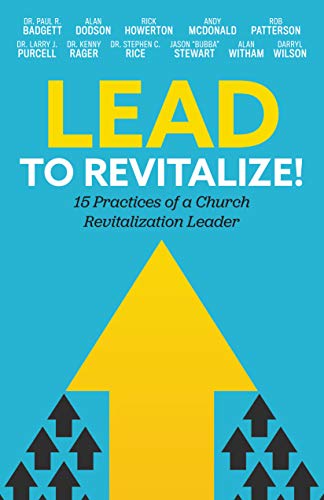
Over the past few years, the Regional Consultants of the Church Consulting and Revitalization Team and I noticed that pastors who successfully led their churches to experience revitalization possessed consistent characteristics. We developed resources on this topic and recently wrote a book entitled Lead to Revitalize: 15 Practices of a Revitalization Leader. The list only scratches the surface, but these ten characteristics stand out to us. I will detail these in a two-part blog post. Here is part one:

10 CHARACTERISTICS OF A REVITALIZATION PASTOR

1.  Revitalization pastors lean into conflict.  Some pastors avoid conflict at all costs. They may develop a brilliant, God-given vision for the future of the church, but they scrap it just as soon as one or two people are critical. Revitalization pastors do not necessarily like conflict, but they are willing to face it in order to fulfill the God-given vision.

2.  Revitalization pastors are willing to take risks. It’s risky to help a church understand that they are being ineffective. It’s rarely pleasant to confront difficult people or to seek restoration of a broken relationship, but revitalization pastors do what’s right instead of merely doing what’s easy and convenient.

3.  Revitalization pastors work hard on church relationships. As a child, most of us learned the little hand visual that accompanied the saying “here is the church, here is the steeple, open the door and here are the people.” As adults, we know that the symbolism is lacking because the church is not a building; the church IS the people. Revitalization pastors understand that building a church means building people.

4.  Revitalization pastors take the lead in evangelism. A church cannot be revitalized without reaching new people with the Gospel. A revitalization pastor places emphasis on evangelism and leads by example in this area. Methods of evangelism vary from church to church and community to community, but churches experiencing revitalization are making new converts for Christ.

5.  Revitalization pastors lead with a vision. Visions are sometimes written, sometimes spoken, and sometimes written and spoken! Revitalization pastors have a God-given vision for the church’s future and they share it regularly with the church.

For more information please contact me.

Click on image to purchase a copy of Lead to Revitalize.

Reboot or Rebuild the Church

When the pandemic began, most of us assumed that our churches would just bounce back to “normal” shortly after the Covid-19 restrictions lifted. Much like turning our internet modem off and then back on when we experience connection issues, we thought the church would simply “reboot.” But, a reboot has not happened and it may never happen.

LifeWay Research indicates that only 50-70% of pre-Covid attendees had returned to in-person church activities by August, 2021. According to researcher, Scott McConnell, “worship attendance is improving, but there is still a large gap between today’s in-person attendance and pre-COVID levels.” The percentage is higher when online participation is included, but those numbers are difficult to track. As we move forward, we will not be able to simply reboot; we will have to rebuild!

We will not be able to simply reboot; we will have to rebuild!

That’s easy to recognize, but how do we have a “rebuild” mindset? What does that even mean? Here are seven key elements of rebuilding.

7 Keys to Rebuild the Church

  1. Outreach. We must continue to reach out to those who have never attended our church. Many communities are growing and new prospects are moving in regularly. Even in non-growing communities, there are people who need Christ. Some of them are experiencing grief related to the pandemic and are more spiritually open than ever.
  2. In-reach. Don’t give up on members and former attendees who haven’t returned to church. Without being pushy or assigning blame, reach out to them. Help them take small steps back to church. Maintain safety measures for those who are at risk and/or have concerns related to their health.
  3. Ministry. Provide pastoral ministry to all church members. That’s fairly easy for those in attendance, but challenging for those who have not returned. If the church is small, you can print off the membership role and call a few members each day to check on them. When you call, ask if they have needs and prayer concerns. Write down what they share and pray for them over the phone. When you call them in future, check your notes and ask them about the things they shared on the last call. If the church is larger, you can share this ministry with the deacons, Sunday School teachers, or form a special phone team. A safe, personal touch matters more than ever!
  4. Assimilation. Be prepared when new people attend and others return. In addition to all the normal assimilation basics, give priority to cleanliness and safety. We will never just “go back to normal” after living through a pandemic. Masks, hand sanitizer, bleach, and personal space changes are here to stay.
  5. Creativity. Don’t pretend the pandemic is over. The truth is, long after it is over, it will not be “over.” Be creative in providing options in worship and other church ministries. Make sure that those who are extra cautious are made to feel welcome and treated with respect.
  6. Technology. Technology is not the Devil! We’ve learned so much about technology during the pandemic, and reached new people as a result. We should continue to improve and expand our use of technology, even as our in-person attendance increases.
  7. Focus. Specifically, focus on Jesus! People need Jesus! Preach Jesus! Sing about Jesus! Pray in Jesus’ name! Walk with Jesus! Love Jesus! Model Jesus! People need Jesus!

“…focus on Jesus! Preach Jesus! Sing about Jesus! Pray in Jesus’ name!…People need Jesus!”

Bonus Tip: Don’t give up!

“And let us not grow weary of doing good, for in due season we will reap, if we do not give up. So then, as we have opportunity, let us do good to everyone, and especially to those who are of the household of faith” (Galatians 6:9-10, ESV).

Can Non-Christians Have Joy?

In 1971, the group Three Dog Night released a song that was the #1 song on the charts for 6 weeks in a row.  Here are some of the words to the song:

Jeremiah was a bull frog; was a good friend of mine.  I never understood a single word he said, but I helped him drink his wine.   And he always had some mighty fine wine.  Joy to the world; all the boys and girls, now.  Joy to the fishes in the deep blue sea; joy to you and me.

It seems to me that this song contains a very misguided view of true joy and where it originates.  In the New Testament, the word “joy” is the word χαρά [khar•ah].  Throughout the Bible, joy is almost always associated with salvation.

In Luke 2:10, the angel told the shepherds, “Do not be afraid; for behold, I bring you good news of great joy….”  What was that great joy?  “Today in the city of David there has been born for you a Savior, who is Christ the Lord”  (Luke 2:11, NASB).  David linked joy and salvation when he prayed, “Restore to me the joy of my salvation” (Psalm 51:12, NASB).

I contend that only Christians can experience Biblical joy because only Christians have experienced salvation.  Non-Christians can certainly experience happiness in life, but happiness can come and go.  Joy is constant — it does not depend on circumstances.  I like to say it this way:

Happiness depends on happenings; Joy depends on Jesus!

If we’re going to choose a song about joy, I think the Isaac Watts version of “Joy to the World” is much better than the Three Dog Night version.  Here are the words:

 Joy to the world,  the Lord is come!  Let earth receive her King.  Let every heart prepare Him room.  And heav’n and nature sing.  And heav’n and nature sing.  And heav’n, and heav’n and nature sing.

What do you think?  Can non-Christians have joy in their lives?

The Dream Church

I love serving and helping our Kentucky Baptist Convention churches. I’ve been privileged to serve Kentucky Baptist churches for 36 years with 28 years in the local church and 8 years on the KBC staff. I have hope for the future of Kentucky Baptist churches. In this post, I’m going to dream about where our KBC churches are going by asking the question “what if”.

What if we could create places where every person began to discover his or her place and purpose in God’s great big world? Imagine! What if our churches were places where people could be “real” and relationships could go well beneath the surface? Imagine!  What if our churches were places where “second chances” really existed? Imagine! What if you found a place that helped you to be the person God created you to be in one of our churches?  Imagine!

What if? Isn’t that a great question? What if? Imagine…I think I will!…I imagine our KBC churches to be places of diversity where people from all walks of life can find acceptance and fulfillment. I imagine our churches to be a people who are not afraid to believe God for the impossible. I imagine our churches to be a people who embrace the future without forgetting the past. I imagine our churches to be churches who value one’s service over one’s standing. I imagine our churches to be places where people encounter Jesus on a weekly basis and experience real life-change as result.

I believe we are doing well in many of these areas. I commend our churches, their pastors, and their leaders. But, as in all areas of life, we can make improvements. Let’s continue to be open to the leadership of the Holy Spirit, continue to turn our focus to Christ, and continue to seek improvement and excellence for God’s ultimate glory!

Churches & Car Dealerships

Car Salesman

Is there anything in life more frustrating than buying a car? Last week my wife and I attempted to replace one of our vehicles. It seems that every time I step on a car lot it tests my Christianity–that day was no exception. At one point during the “trial,” while the manager was making a dramatic last-ditch effort to make a sale, I wanted to ask “do I have the word stupid tattooed on my forehead or something?” I kept my cool, but I sent him back to his secret manager’s lair without a sale.

Don’t misunderstand, I realize dealerships are in the business to make money and salesmen are just trying to earn a living. I don’t fault them for that, but the truth is, buying a car is about as much fun as having your fingernails pulled out with a pair of needle-nosed plyers. Through the years, I have owned various brands: Chevrolet, Ford, Chrysler, Honda, Toyota, Nissan, and Mazda, but my experience was usually the same. I believe both car dealerships and churches might benefit from some of the things I wanted to say to the dealership that day:

  • I’m not the scarecrow in the Wizard of Oz. Believe it or not, I actually have a brain. I’ve done some reading and research in my life. I can think, evaluate, and make decisions. Don’t talk down to me.
  • Give me some space. Sometimes I like to window-shop a little before being bombarded with the “sales pitch.” I expect a “sales pitch” and I’m ok with that, but just give me some space first. Let me just “kick the tires” for a while. If I really like them, I will buy them from you and a car to go with them!
  • Be honest with me. We all know the stereotype that car salesmen are dishonest. In many cases, they probably earned that reputation. The church is sometimes viewed the same way, so honesty is paramount to me.
  • Don’t play games and don’t play me. There’s nothing I hate much more than “being played.” Almost everyone I know feels the same way. Car dealerships, churches, salesmen, and preachers should be transparent and genuine.
  • Give me the facts and give them to me fast. How long can it possibly take to calculate the value of my trade-in? I looked up the Kelly Blue Book price on the internet in 5 minutes before I left the house! Don’t go on and on–it won’t change the facts. Give me the facts and I’ll make a decision.
  • Sell, but don’t oversell. I came expecting a sell, but don’t go overboard or you will turn me off for sure.

Boy oh boy…..I feel so much better now that I got that off my chest. Thanks for allowing me to vent. Let me end with this question, “how often does an unchurched person want to make these same statements to us after he visits one of our churches?”