Lead to Revitalize – Part 2 (Revitalization Series)

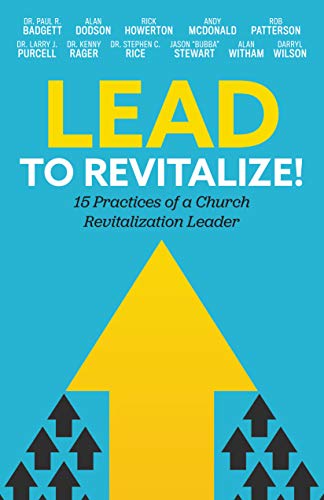
In the post, Lead to Revitalize – Part 1, we looked at the first 5 characteristics possessed by pastors who lead churches to experience significant revitalization and health. In this post, we will look at 5 additional characteristics. These 10 characteristics are listed in random order and all are equally important. We developed resources on this topic in our book entitled Lead to Revitalize: 15 Practices of a Revitalization Leader

10 CHARACTERISTICS OF A REVITALIZATION PASTOR

6.  Revitalization pastors demonstrate dependence on God.  This should not surprise anyone! The Scriptures clearly teach our need for the Holy Spirit’s power in our lives. Revitalization pastors seem to understand this fully because they consistently spend time with God in Bible reading and prayer, they often cry out to God for His blessing on the ministries of the church, and they lead the church to give God the glory when they experience a spiritual “win” as a congregation.

7.  Revitalization pastors are Lifelong Learners.  You’ve heard the saying “leaders are readers.” We would add the saying “revitalization pastors are lifelong learners.” Even those who are not avid readers find other ways to learn. They often listen to other pastor’s sermons, attend conferences, participate in state convention growth opportunities, and meet with other pastors to learn best practices.

8.  Revitalization pastors develop leaders and laborers in the church.  Revitalization pastors agree with the Apostle Paul that one of the main roles of a pastor is “to equip the saints for the work of ministry, for building up the body of Christ” (Ephesians 4:12, ESV). As a result, they develop a leadership development strategy for the church, regularly delegate ministry responsibilities to trusted people, and personally mentor a group of men in the congregation.

9.  Revitalization pastors lead the church to celebrate wins.  They celebrate wins by showing appreciation to church volunteers who serve faithfully. They sometimes ask for testimonies of where people recently saw God at work. They regularly focus on positive things that happen in the life of the church.

10.  Revitalization pastors lead the church to implement change.  Revitalization pastors spent time thoroughly explaining the reason behind a needed change and invested extra time with people who were slow to accept a needed change. They bathed proposed changes in significant prayer and resisted moving too quickly when making a major change.

Revitalization pastors come in all shapes and sizes, but they share these characteristics. There is a desperate need for Godly leadership in the local church. It is not enough for a pastor to develop a vision for revitalization, but he must LEAD the people to fulfill that vision. In many cases, it takes years to see stagnant churches become vibrant and healthy, so revitalization pastors tend to have longer tenures. Many studies show a relationship between pastoral tenure and church health.

Lead to Revitalize – Part 1 (Revitalization Series)

Over the past few years, the Regional Consultants of the Church Consulting and Revitalization Team and I noticed that pastors who successfully led their churches to experience revitalization possessed consistent characteristics. We developed resources on this topic and recently wrote a book entitled Lead to Revitalize: 15 Practices of a Revitalization Leader. The list only scratches the surface, but these ten characteristics stand out to us. I will detail these in a two-part blog post. Here is part one:

10 CHARACTERISTICS OF A REVITALIZATION PASTOR

1.  Revitalization pastors lean into conflict.  Some pastors avoid conflict at all costs. They may develop a brilliant, God-given vision for the future of the church, but they scrap it just as soon as one or two people are critical. Revitalization pastors do not necessarily like conflict, but they are willing to face it in order to fulfill the God-given vision.

2.  Revitalization pastors are willing to take risks. It’s risky to help a church understand that they are being ineffective. It’s rarely pleasant to confront difficult people or to seek restoration of a broken relationship, but revitalization pastors do what’s right instead of merely doing what’s easy and convenient.

3.  Revitalization pastors work hard on church relationships. As a child, most of us learned the little hand visual that accompanied the saying “here is the church, here is the steeple, open the door and here are the people.” As adults, we know that the symbolism is lacking because the church is not a building; the church IS the people. Revitalization pastors understand that building a church means building people.

4.  Revitalization pastors take the lead in evangelism. A church cannot be revitalized without reaching new people with the Gospel. A revitalization pastor places emphasis on evangelism and leads by example in this area. Methods of evangelism vary from church to church and community to community, but churches experiencing revitalization are making new converts for Christ.

5.  Revitalization pastors lead with a vision. Visions are sometimes written, sometimes spoken, and sometimes written and spoken! Revitalization pastors have a God-given vision for the church’s future and they share it regularly with the church.

For more information please contact me.

Click on image to purchase a copy of Lead to Revitalize.

Baby Steps (Revitalization Series)

When do you prepare your home nursery? Before the baby comes or after the baby comes? Practically everyone prepares the nursery BEFORE the baby comes. Many struggling churches have no young parents attending, so the nursery sits unused. That is actually the perfect time to update the nursery facilities. If you wait until a young family visits, then it’s too late! Their baby arrives and you’re not ready!

Ingredients of a Great Church Nursery

  1. Clean. The nursery MUST be clean. Parents are already reluctant to leave their precious child behind while they attend worship–they certainly will not do so if the nursery is not clean. That means the nursery must not only look clean, it must smell clean. Many churches need to pull up old carpet and replace it with a surface that is easy to keep clean.
  2. Safe. The nursery MUST be safe. Churches should have a secure check-in system for every child even if there are only 1 or 2 attending. Parents will spread the word to others that the church gives priority to safety and security. Workers should be carefully vetted with background checks and other safety measures. There should always be at least two workers in the nursery at all times.
  3. Proximity. If possible, the nursery should be close to the place where the parents attend worship. Parents will feel more comfortable leaving their baby in the nursery if the sanctuary is nearby. Many churches use a texting app to communicate with parents if they need to be reached during the worship service.
  4. Modern. Modern does not have to be expensive; it simply has to be up-to-date. Modernizing the nursery can often be accomplished with flooring, furnishings, paint, and lighting. The space should be bright and cozy. When thinking about the décor, parents want it to feel like their nursery at home.
  5. Supplied. The nursery should be well-supplied with safe furniture, a diaper-changing station, handwashing supplies, age-appropriate toys, and parent-approved snacks.
  6. Staff. Put your BEST people in the nursery. Recruit people who love children and love Jesus. Provide training so they are able to serve with excellence. The Kentucky Baptist Convention can provide training.

For more information about church revitalization, the KBC has written Lead to Revitalize: 15 Practices of a Revitalization Leader. Feel free to contact me directly at steve.rice@kybaptist.org if you have questions or need assistance.

5 Promises to My Church

I love to please people!  All my life, I have wanted people to like me, affirm me, and generally think that I’m wonderful.  As I have matured as a leader and as a pastor, I’ve discovered that I have to sometimes set those desires aside and do the right thing regardless of what other’s think.  My goal MUST NOT be to simply “please people” — my goal must be to help people and please God.  Sometimes I have to set boundaries and tell people “no” in order to help them.  Other times I have to model a new approach and lead people to walk in a more effective, efficient manner.

Sometimes I have to set boundaries and tell people “no” in order to help them.

Everyone seems to have their idea of what their pastor should do and how he should use his time.  Hardly a week goes by, that someone does not pull them aside and share with them their opinion of what their life’s assignment should be.  Most of the time, the assignment is fair and reasonable, but it almost always matches their own personal preferences and desires instead of the desires of the Lord or their pastor.  As the senior pastor, he MUST consider the big picture and keep the entire church body in mind as he leads.  If he simply jumps from personal assignment to personal assignment, he will not lead with vision and God-given direction.

Here are the 5 promises I made to a church during my first sermon as their senior pastor:

  1. I promise to love God.  In order to fulfill this promise, I must be disciplined in my private time with the Lord.  The man who never spends time with God in private is no good in public.
  2. I promise to love my family.  I love to work hard and I love being a pastor (most the time).  Because of this, I have to guard against neglecting my family.  I have asked other staff members to tell me if they see this in my life and I have pledged to tell them if I see it in their lives.
  3. I promise to love you.  I love our church and all our people.  I look forward to serving our Lord together for many years to come.  Keep in mind that all of our pastors love God and love our people as well.
  4. I promise to love the unchurched.  I want to see people come to Christ.  I need to spend more time around lost people.  I need to get out of the office more and into the community.
  5. I promise to preach the Bible.  I have tried my best to focus on God’s Word in my sermons and in my teaching.  It takes time to prepare true, Biblical sermons, but it is worth all the hard work and extra effort.  Currently, I set aside Tuesday and Wednesday as my main study days.  Occasionally, I will schedule an appointment or meeting on those days, but I try to devote those days to preparation for preaching and teaching the Bible.

I also went on to say the following to them:

As we move forward, I pledge to always be open to suggestions and ideas.  My default of wanting to please people will always be there, I’m sure.  But, I promise when I’m faced with the choice of “simply pleasing someone” or “providing Godly leadership,” I will strive to choose providing Godly leadership every time.

If you are a pastor, hang in there! God is good and worthy of our service. If you are a church member, pray for your pastor. Encourage him. Be a blessing and serve God faithfully!

Reboot or Rebuild the Church

When the pandemic began, most of us assumed that our churches would just bounce back to “normal” shortly after the Covid-19 restrictions lifted. Much like turning our internet modem off and then back on when we experience connection issues, we thought the church would simply “reboot.” But, a reboot has not happened and it may never happen.

LifeWay Research indicates that only 50-70% of pre-Covid attendees had returned to in-person church activities by August, 2021. According to researcher, Scott McConnell, “worship attendance is improving, but there is still a large gap between today’s in-person attendance and pre-COVID levels.” The percentage is higher when online participation is included, but those numbers are difficult to track. As we move forward, we will not be able to simply reboot; we will have to rebuild!

We will not be able to simply reboot; we will have to rebuild!

That’s easy to recognize, but how do we have a “rebuild” mindset? What does that even mean? Here are seven key elements of rebuilding.

7 Keys to Rebuild the Church

  1. Outreach. We must continue to reach out to those who have never attended our church. Many communities are growing and new prospects are moving in regularly. Even in non-growing communities, there are people who need Christ. Some of them are experiencing grief related to the pandemic and are more spiritually open than ever.
  2. In-reach. Don’t give up on members and former attendees who haven’t returned to church. Without being pushy or assigning blame, reach out to them. Help them take small steps back to church. Maintain safety measures for those who are at risk and/or have concerns related to their health.
  3. Ministry. Provide pastoral ministry to all church members. That’s fairly easy for those in attendance, but challenging for those who have not returned. If the church is small, you can print off the membership role and call a few members each day to check on them. When you call, ask if they have needs and prayer concerns. Write down what they share and pray for them over the phone. When you call them in future, check your notes and ask them about the things they shared on the last call. If the church is larger, you can share this ministry with the deacons, Sunday School teachers, or form a special phone team. A safe, personal touch matters more than ever!
  4. Assimilation. Be prepared when new people attend and others return. In addition to all the normal assimilation basics, give priority to cleanliness and safety. We will never just “go back to normal” after living through a pandemic. Masks, hand sanitizer, bleach, and personal space changes are here to stay.
  5. Creativity. Don’t pretend the pandemic is over. The truth is, long after it is over, it will not be “over.” Be creative in providing options in worship and other church ministries. Make sure that those who are extra cautious are made to feel welcome and treated with respect.
  6. Technology. Technology is not the Devil! We’ve learned so much about technology during the pandemic, and reached new people as a result. We should continue to improve and expand our use of technology, even as our in-person attendance increases.
  7. Focus. Specifically, focus on Jesus! People need Jesus! Preach Jesus! Sing about Jesus! Pray in Jesus’ name! Walk with Jesus! Love Jesus! Model Jesus! People need Jesus!

“…focus on Jesus! Preach Jesus! Sing about Jesus! Pray in Jesus’ name!…People need Jesus!”

Bonus Tip: Don’t give up!

“And let us not grow weary of doing good, for in due season we will reap, if we do not give up. So then, as we have opportunity, let us do good to everyone, and especially to those who are of the household of faith” (Galatians 6:9-10, ESV).