6 Keys to Obtaining Guest Contact Info

There is one KEY ingredient for effective follow-up to take place–you must get the CONTACT INFORMATION of your guests! The only way for an effective follow-up system to work is to have a way to communicate with guests the following week. Here are some tips for obtaining the contact information from your guests.

How to Obtain Guest Contact Info

1.  Guest parking. Save the best, most visible parking spots for guests. The guest parking spots should be near the desired guest entrance and parking lot greeters should be near the area where guests park. Making a good first impression in the parking lot relaxes guests and increases the likelihood that they will share their contact information when asked to do so.

2. Utilize good greeters. Every church should utilize a greeter team. Although the church may not need parking lot greeters in order to park cars, their presence is still vital. They can cheerfully greet guests and members as well as answer questions as folks are entering the facility. Greeters should be stationed at every outside entrance and greeters or ushers should be placed at all the entrances into the worship facility. If the building is large, greeters should be scattered throughout areas of the building as well.

3. Use a connection card in the worship guide. There are lots of ways to obtain guest contact information, but one of the best ways is to insert a connection card in the worship guide. A card that is attached to the worship guide is good, but it is noisy when someone tears off the perforated portion. Some guests are hesitant to tear off the card because they do not want to attract attention. When inserted in the worship guide, the connection card should be placed on fairly thick paper. Cards can be printed three-to-a-page on standard 8.5 x 11-inch 70-lb. paper. 70-lb. paper is better than the thickest 110-lb. card-stock because it will not fall out of the worship guide as easily. It is also good to have connection cards on the back of the pews or seats in case some guests do not get a copy of the worship guide as they enter the worship service.

4. Ask for less; get more. Most people ask for TOO MUCH INFORMATION on the connection card. As a result, guests avoid filling out the card altogether and follow-up does not take place. Ask for basic contact information such as name, address, email, best phone number, etc. Generally, when you ask for less information, you will get a higher rate of return from your guests. It’s better to receive less information from your guest than to receive none at all.

5. Recruit the right person to extend the welcome. In many cases, guests are never even acknowledged during the worship service. Of course, they should never be singled out or embarrassed, but it is helpful to acknowledge them and to thank them for coming. The church should recruit a genuinely friendly person who is able to communicate in a comfortable, relaxed manner. Many times the best person for this role is someone other than a staff member. At some point during the service, this person can verbally welcome guests and ask them to complete the connection card. Encourage the guest to drop the completed connection card in the offering plate as it passes or to hand their card to an usher after the service. It is best if the offering is taken up at the end of the service, so guests will have more time to gain confidence in the church leadership and more time to complete the information.

6. Offer a gift to those who complete the connection card. It is often helpful to offer a gift to those who complete the connection card. One effective approach is to place copies of a small Christian book on tables by the exits in the worship center. During the welcome time, guests can be told to pick up a copy of the book as they exit the service as a gift for completing the connection card. The church should place a generous supply of books and allow guests to take them on their own. That approach seems to say “since you are trusting us with your contact information we are trusting you with our stack of books.” The church demonstrates a generous spirit with this approach. Be sure to hide a letter inside each book that thanks the guest for coming and invites them to attend again in the near future.

These are not the only ways to obtain contact information from guests, but keep it mind, you MUST get the contact information from your guests in order to follow-up. For more information along these lines, check out the following posts:

Churches Are Too Much Like Car Dealerships

The Chick-fil-A Church

The 3-minute Rule

4 Marks of a PERFECT Church Member

The truth is–there is no perfect church member, so what is the target? How would we describe an ideal church member? Does the Bible give us any direction?

In the book of 2 Timothy, the Apostle Paul writes about a man named Onesiphorus. This man was a member of the church of Ephesus who made the long journey to minister to Paul when he was being held in the Mamertine prison in Rome. Paul shares several positive traits from the life of Onesiphorus that every church member should model.

4 Marks of An Ideal Church Member

1. He was a refresher. Paul said that Onesiphorus “often refreshed” him (2 Tim. 1:16). Every pastor and church could benefit from church members like that–men and women who are positive and encouraging. It’s very common to see the opposite, but this man refreshed Paul in Ephesus and in Rome.

2. He was loyal. We know from the Bible that many people deserted Paul when persecution accelerated. Among those were Phygelus, Hermogenes, Demas, and Alexander the metal worker. According to the Bible, Onesiphorus “was not ashamed” of Paul’s chains and the fact that he was in prison (2 Tim. 1:16). He stood with Paul in Ephesus when it was popular to do so and he stood with Paul in Rome when it was unpopular and dangerous to do so! Don’t you just love people like that? When the chips are down; they’re still around!

When the chips are down; they’re still around!

 3. He was diligent. It was difficult for Onesiphorus to locate Paul in the city of Rome since he was being held in a damp, dark cell. But, he “searched hard” for the Apostle until he located him (2 Tim. 1:17). He showed great diligence. Churches need members who are diligent to the task(s) to which God has called them.

4. He was a helper. Paul said to the Christians in Ephesus “You know very well in how many ways he (Onesiphorus) helped me in Ephesus” (2 Tim. 1:18). I’m not sure there could be a better title than “helper.” I would love someone to say about me, “you know how many ways that Steve Rice helped me.” May God give us more churches who are filled with “helpers.”

PRAYER: “Lord, help each of us to be ideal church members. Help us to be refreshers, help us to be loyal, help us to be diligent, and help us to be helpers. Lord, we ask this for the betterment of Your Church and for Your glory! Amen.”

5 Ways to Follow-up

The KEY to all guest follow-up at church is to obtain the contact information of the guest, but what do we do with the information the following week? Here are a few suggestions that I have practiced during the years.

5 Ways to Follow-up with Guest Contact Information

1. Send a personalized email (Monday). Send an email on Monday just after lunch. Make sure to personalize the email as much as possible by using the name of the guest throughout and by mentioning something you talked about if you met in person at the service. Jot down a quick note after talking to a guest at the weekend service, so you can remember it in the Monday email.

2. Send a handwritten note with a gift (Wednesday). Write a brief note and mail it on Wednesday, so the guest will receive it on Thursday or Friday. Include a $5.00 gift card from your local ice cream shop as a special treat. There is something special about receiving a handwritten note since very few people write them in today’s fast-paced world.

3. Invite them to attend again. Make sure that you personally invite them to attend again the following weekend or a weekend in the near future. Do that in both the email and the personalized note. Say something like “John, again, I’m so glad you attended this past weekend and I want to personally invite you attend again real soon.”

4. Make a personal visit. Depending on the culture, a personal visit can be a good practice. Make it a doorstep visit and drop off a nice church information packet. As always, be sure to invite them to attend again real soon.

5. Remember their name next time they attend. This is hard work, but it can be accomplished with good organization. Make a list of the guests who shared their contact information along with the weekend they attended. Carry this on your phone or in your Bible. Look over the list often and memorize as many of the names as possible. Utilize the list when needed without letting the guest know that you are doing so.

For more posts on similar topics, also see:

Six Keys to Obtaining Guest Information

Churches and Car Dealerships

4 Things That Should Happen In the First 7 Minutes

7 Minutes and Counting

5 Reasons to Disciple One-on-One

Many effective discipleship approaches exist, but one of the simplest, most rewarding methods is one-on-one discipleship. This method is also called life-on-life or mentoring. Since my college days, I have personally utilized this method as one of the ways to obey Matthew 28:19.

Disciple One-on-One

1. One-on-One discipleship develops lasting friendships. When two people work together towards spiritual maturity, the Holy Spirit connects their hearts in a way that is difficult to describe.

2. One-on-One discipleship is flexible in schedule. Since this method involves only two individuals, meeting places and times can be very flexible. Even when traveling, you can utilize your mobile phone and email with this approach.

3. One-on-One discipleship provides modeling. The good news with this method is that the person being discipled can see your life “up close and personal.” The bad news with this method is that the person being discipled can see your life “up close and personal.” As the disciple-maker, we cannot model perfection, but we can model a Godly, Christian life.

4. One-on-One discipleship has staying power. Because of the built-in relationship and accountability factors, this model is very effective over time.

5. Almost anyone can disciple one-on-one. Any Christian who is sincere about his walk with Christ can build into the life of another person.

You might also like these blog entries:

The Skinny on Spiritual Growth

Make A List

Grow Up

Transitional Interim Pastor Training

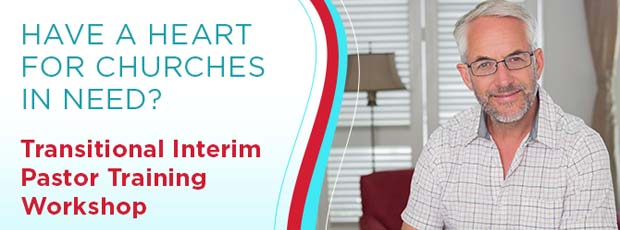
Untitled-1We are offering a Transitional Interim Pastor Training at the Kentucky Baptist Convention building on November 23-24, 2015 that will equip men of God to provide leadership for worship services, supply basic pastoral care, and guide a congregation through the inherent complexities, challenges, and opportunities during the interim time.

The workshop will help participants focus on:

  • The role and responsibilities of a transitional interim pastor
  • The transition process
  • Assessing the church’s history
  • Assessing the church’s current realities
  • Strategic preparation for the church’s future
  • Preaching and teaching during the interim
  • Conflict management and congregational healing
  • Supporting the search committee
  • Preparing the church for the next pastor
  • Leaving gracefully

Cost is $100 per person. For more information please contact me at steve.rice@kybaptist.org or at 502-489-5731.